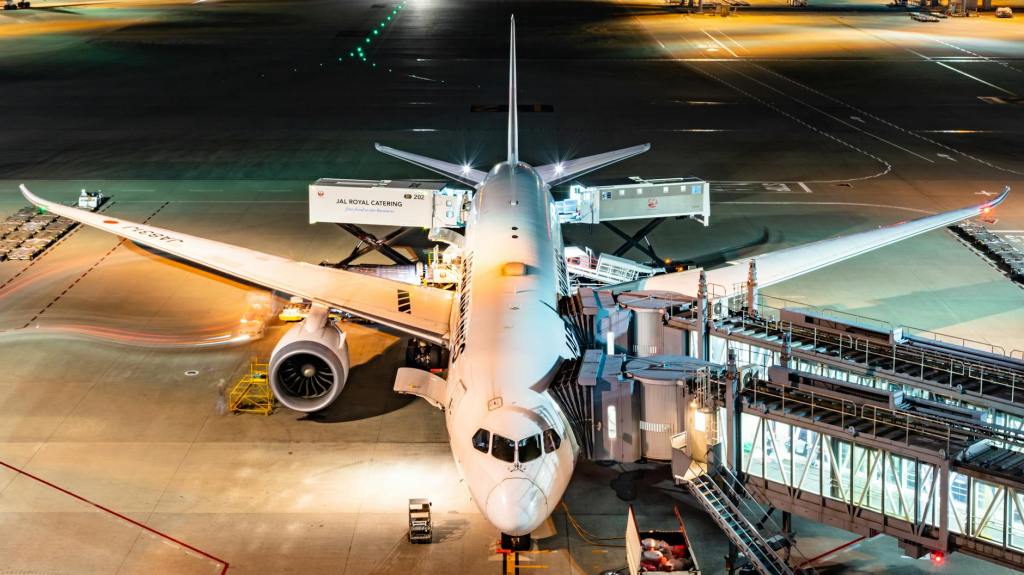
Beyond the black activism of the Sixties there rose a bold stroke of defiance that few, if any, remember. In the winter of 1969, on the front line of an international airport, two minimum-wage warriors fought the fight, lost the battle, yet won the war.
While we slipped past the unforgettable largely forgotten, we no less furthered the same cause if not the same way. We neither prettied up the record nor mopped up the mess, yet did all right all wrong.
#
In the argot of the airline industry, ground handling “turns” an airplane. We’re the ramp rats, bag bums, and gate apes, the never-sit-still, always-in-a-hurry, behind-the-scenes army who serve the needs of the fleet from block-in to block-out.
At the time, I worked the “box” of an airline catering truck. A load sheet from our operations center dictated the what, where, when, and Airport Ground Control granted the authorizations to getting there. We typically loaded thirty flights a night to a logistical distribution process that ran remarkably smooth—unless it snowed.
Less possibly an asteroid or a tornado, nothing cripples an airport faster than a snowstorm. And when the metal stops, the radio doesn’t. This particular night, in blizzard conditions, fifteen inches fell in fifteen minutes.
#
In the box, I heard the engine race and the driver yell, “Hang on, baby!” Heeding the warning, I braced for impact then takeoff of what felt like a launch from a four-foot snowbank. At once, forty-eight service trollies cleared the deck before the great fall. To my suspicion that every tossed salad re-tossed and every mixed vegetable remixed, I reordered the disorder in the aftermath, closing drawers and securing doors.
“Seven-up, coming down,” the driver hollered, biz-lingo for a DC-7 and our first customer.
Under the floor, I heard a pump scream and an actuator whine. Subsequently, a pair of hydraulic scissors raised the box as the truck backed up and hit hard.
#
In life, we’re all chasing a goal. My driver’s objective—tag every airplane with a puke-green signature smear of our scissors-lift cargo box. Four years and counting, he’d finished half the world’s fleet in his pursuit of creative destiny. Hence, the Bruise Brothers, we were legend. If airplanes were the medium, a Ford F-950 served the means. Pragmatists over idealists, we embraced every metallic smack as just another contributing canvas to our gallery in the sky.
#
The Sevens demanded respect. The Douglas dinosaurs afforded scant warning and no mercy if some meatball bumbled into a spinning propeller. That summer I saw a baggage cart blown through a prop, and six months later we were still picking up the pieces.
#
A couple of Stretch Eights, a Sud Caravelle, and a Boeing 720 later, the intensity of the storm increased. Visibility dropped to zero and terminal movement trickled to a standstill. To prioritize snow removal, the tower had moved the runway hold lines from the taxiways to the tarmac. This single decision cut our access points in half, and twenty minutes later we were an hour behind.
#
Seeking refuge in the cab from the cold, I found my driver in search of a 421-tail. Over the radio our Ops directed us back to a terminal we just left. The airline had changed gates. It happens. An operator occasionally misses a ramp update when a tail arrives late, is held for inspection, or removed for maintenance. An hour later, we found the plane but not the flight. The airline had changed aircraft. Another call earned us another shuffle to another gate.
In time, we skidded out of a turn and almost into the plane. “We found the tail but can’t load it,” my driver informed dispatch. “A fuel pumper got our access blocked.”
Our signature smack out of view, my driver asked me, “We see this plane before?”
I spun round, and squinting under the glare of the ramp lights confirmed, “It’s that Two-Seven the deicing guys clobbered last winter. I recognize the scab-patch on the vertical fin.”
The driver looked over his shoulder. “Yeah-yeah, that right. They banged this bird bad.”
I wondered, then asked my driver, “You ever fly?”
He didn’t ponder the question. “Nope. Never have. Everywhere I go, I drive.”
“Afraid?”
He shook his head. “Nah, I’m fine with flying. It’s the meals that scare me.”
A tie-guy approached our truck. On the ramp, neckties identified only gate agents and pilots. He wasn’t a pilot.
The driver rolled down his window.
“Hey, whaddya waiting on? Let’s go,” he ordered the driver, a pair of bare, wet hands directing his words. “Ten minutes to get out of here, we still need meals.”
“Be look’n to me you still need fuel.”
Tie-guy, spinning an about-face, observed—probably for the first time, the yellow pumper, a four-inch hose suspended from the right wing, and six safety cones positioned around the obvious. “You can’t squeeze in there?” he persisted.
The driver rolled up his window. “What I gotta tell this fool? We back over that hose and blast his ass to Pluto, I guarantee we all be outta here quicker than ten minutes.”
The refueling complete, I returned to the box. The driver raised the lift, took aim, and pasted a perfect smudge across the galley doorsill. As we had previously tagged the aircraft, I assumed he just wanted the practice.
#
Aboard the plane the mood of the cabin crew reflected the delay, and I sensed we just left one storm for another. A flight witch the size of a middle linebacker stomped into the galley. The appearance of two bulbous veins, one each aside of her head, imparted the woman with a pair of horns. “You just don’t get it, do you Sambo?” she unloaded, “if the doors don’t close, the wheels don’t roll. If you’re late, we’re late.”
“Say what?”
Her claws went to her hips as her horns pulsed blood red. “Because you people are always in slow-mo, we’re stuck here for another hour!”
“Then why the hurry if we got another hour?”
If what I said triggered her rage, what I heard next cut deeper than any straight razor in a pool hall. The woman exploded, spewing a racial rant that sent civil rights back to the Civil War. The human flamethrower would have refueled if not for four passengers who leapt from their seats to put out her fire.
Returning to the box, I held back my driver and saved the woman’s life. “Forget it, man. Just let it go.” And he did—with a fist through the plywood liner of our cargo box.
“That had to hurt,” I alleged through a cloud of dust and splinters.
His shoulders rose with each breath of his chest. “Not as much as the hurt from those who can’t remember what we’ll never forget.”
I didn’t need a history lesson. “Okay, it hurts.”
“And if nothing’s done, nothing changes.”
“Hey, man. Rosa Parks stood up by sitting down—and everything changed.”
Two eyes then tore through me like two bullets. “Uh-huh, and when nitro met glycerin everything else changed too.”
While I could ignore it, I’d never forget it. My driver was right. Nobody sees the light with their eyes closed. “So, where do you start?”
He started with the darkness, and stared it till he smiled. “We got any dock pop?”
I suspected otherwise, but still searched the stock. “Not on this truck.”
“Then call Jesse. Tell him we need six bags of chip-ice and six cases of dock pop.”
I swallowed before I spoke. “You said six cases?”
He stopped smiling.
“Got it. Six cases.”
#
In the winter, aluminum-canned soda inadvertently left on a truck risked the temperature freezing the contents. The appropriately termed “dock pop” then remained on our loading platform as a hazardous material until the weather warmed and the cans thawed. At issue was the danger of frozen soda separating and compressing its CO₂ to the top of the can. Such an explosive potency on an aircraft, at altitude, produced the double-whammy effect of compounding the increased pressure in the container with the reduced pressure in the cabin. Hence, popping a top of frozen soda could be likened to pulling the pin on an airborne grenade. Uncontained, one might say the carbonated expressionism went everywhere.
#
Back on the aircraft, I found Running Tongue redoing her warpaint. “Our truck’s out of soda, lady. We have to wait for a runner.” I next envisioned her future, or something akin to the worst flight of her life aboard a detonated multiple-warhead missile.
#
The following day, I had learned the flight acquired FL330 over Elkhart, Indiana. The captain, I presumed, then announced the cruise altitude and time-of-arrival. I further imagined he killed the no smoking and seatbelt signs, whereupon the cabin crew began the beverage service.
My anticipation exceeded expectations. The plane diverted to Detroit, all aboard required overnight accommodations, and four flight attendants had their wings clipped for passenger endangerment.
Later that day, my phone rang. The caller informed me that our personnel department had mailed my last check, a letter of termination, and CLICK!
#
In twelve months, almost to the day, a registered letter arrived for my signature. In the envelope, I found a check for a year’s back pay and a notice of reinstated employment. I looked for an explanation—and I’m still looking.
Had we played a stunt like that today, we’d be tried for air terrorism. Yet, fifty years ago our revenge for justice just furthered the legend of another Bruise Brothers masterpiece.
 Tom Peer