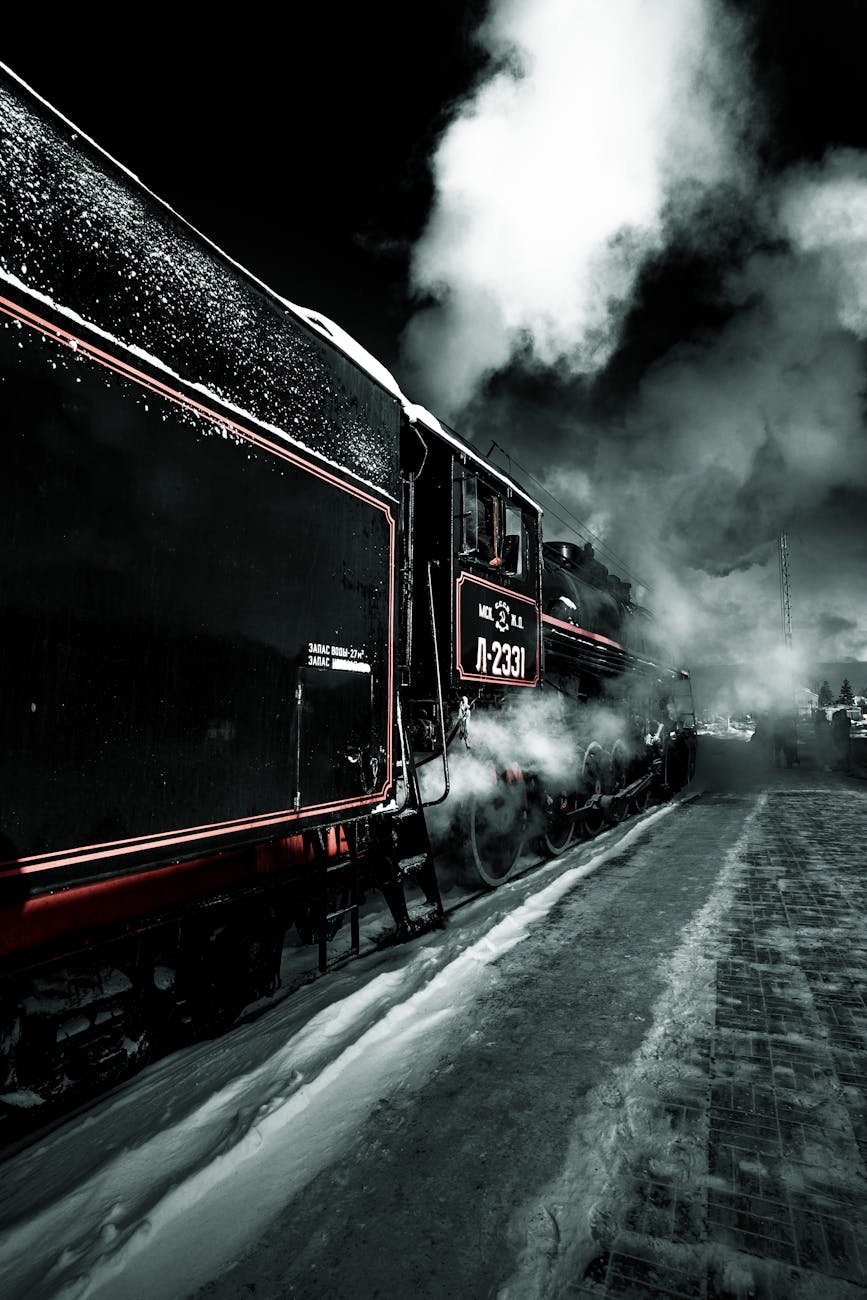
He acknowledges my arrival by standing. I’m not surprised. Manners matter with the British. He offers me a chair. I don’t move. He holds up a cigarette. I shake my head. I seek neither attention nor sympathy. I want nothing more than being left alone.
“I’m Major Greene,” he says, “we’re quite keen on you, you know.”
I remain silent.
“We believe your escape from Marseille presents us with a promising possibility.”
A lingering pause evolving to an awkward lull speaks for me.
“The Americans are about to launch six bombers from Corsica to Marseille-Fos Port. That attack is irrelevant if,” he hesitates in choosing his words, “you come aboard.”
I keep still.
His lips tighten as he sinks into his chair. “You understand that even precision bombing can result in hundreds of civilian casualties.”
I say nothing.
Upon hissing a held breath, he spins a map before me. “I trust you know the importance of this rail bridge to the Germans, for their defense of Southern France.”
I know what all of France knows, and I don’t need a map. “The Viaduct de Caronte.”
He raises a lip. The expression isn’t a smile as much as a peek inside. “If properly trained and equipped for an operation, might you consider returning to Marseille?”
When our eyes meet, I turn away.
“Might you care for a drink? Some tea perhaps? A cognac?”
My cutting reply carries a bit more bite. “Proper training for my holiday, is it?”
He straightens in his chair. “No holiday, I’m afraid.”
“Oh pity.” The letdown less convincing than my sarcasm, I toy with an anticipation of renewed interest. “Please tell me. There’s more?”
He pinches the bridge of his nose. “You will take the night train from Lyon to Marseille. When you disembark, you will fall back from the departing passengers to an adjacent track of empty coal skips. In the shadows, you will climb aboard the first car. When this train leaves for the harbor, across the Viaduct de Caronte, you open the dumper, trigger the acid fuse of a satchel charge, then drop the explosive into the mechanical pit of the turning tower.”
“Brilliant, is it? My suicide in exchange of a bombing mission?”
“You’ll have thirty seconds to make an escape.”
“I already escaped from Marseille. What are my chances of getting away again? If detained and thought a spy, a saboteur, a Jewess—I should be fortunate if earning only a bullet.”
He swallows. “Nonetheless, your bravery will not betray you.”
“For what? For some tin plaque on some cold stone?”
The way of the British, he doesn’t reveal what he feels. Perhaps, he has doubts. He sees through me. I’m not so brave. He made a mistake.
“How old are you?”
I’ve no reason to withhold the truth. “Too much older than I am.”
#
If I move, heads turn. If I stay, eyes stare. There’s no hiding from them. It’s apparent that my spectators, consumed by suspicions, are wondering the purpose of my presence on their train. I should ignore them—if I could.
I don’t feign well and fear far worse. If I’m noticed, I’m watched, likely followed, then possibly discovered. This is my new life, a life of what I’m now aware, wary, and afraid. My eyes close. If I sleep, I might forget my unease, escape the thought of what awaits.
#
My eyes open to a trainman shaking my arm. In the darkness of the car, he lifts a lantern to my face. “Mademoiselle, Mademoiselle, we cannot proceed. We must be off.”
“What? I don’t understand. We’re going to Marseille, yes?”
His free hand chops the night air. “Impossible.”
“What are you saying?”
“I am saying the bridge is no more.”
“The bridge is gone?”
The Germans exploded the Viaduct de Caronte.”
“The Germans.”
“In retreat, they destroyed the bridge to contain the forces retaking the city.” His trembling voice now insists, “Mademoiselle! Please-please, no more questions. We are in the midst of them. We cannot delay.”
My mission for naught, my bravery betrayed, I still retain a foolish fear.
The trainman dips his lantern and looks about the car. A seeming assurance that we’re alone, he whispers, “At last, we are free.”
“Free,” I breathe, the word no longer a hope.
#
A German officer, a file of soldiers on his heels, charges into the car. He’s behind a blinding light concealing his face. The trainman grips my shoulder while my arms tighten around the satchel. Upon a soldier pulling me from my seat, I squirm a hand inside, push, twist, and shatter the glass of the acid fuse. I begin counting.
The officer claims that the train, commandeered by the army, is leaving at once for Lyon. When he orders us off the car, he spies the satchel. “What have you there?”
A jolt of fear stuns me still. In desperation, I concoct an explanation befitting some schoolgirl’s invention. “A handsome German forgot this bag at Lyon. The trainman here insists that I turn it over upon our arrival in Marseille.”
A pair of squint-tight eyes emerge from the light. “I’m sorry, Mademoiselle. Your description of a `handsome German’ is redundant.”
Only twenty seconds remaining, I don’t refute the correction. “Please, with the train now returning to Lyon, could you be so kind as to leave this satchel with the stationmaster?”
When a whistle wails, a strain of rods and chains clatter underneath. The brakes released, the train jerks in response. Too soon, we’re moving.
“Monsieur,” I appeal with a mere ten seconds to spare, “you can please do this for a fellow countryman, yes?”
Without recourse and his overbearing authority now challenged, he extends his hand. “Of course, my pleasure.”
I make the exchange and race to the end of the car. The trainman in tow, we leap before a searing blast hurls us over a track, through a scrub, and into the night—all the way to Marseille.
 Tom Peer